Tulips, with their vibrant colors and elegant shapes, are quintessential symbols of spring. To ensure your garden is awash with its beauty post-winter, it’s crucial to plan and plant ahead. These blooms, ranging from simple single or double petals to luxurious peony-like varieties, are straightforward to cultivate. However, vigilance is needed to protect them from wildlife such as squirrels and deer. The secret to a splendid tulip display lies in timely planting.
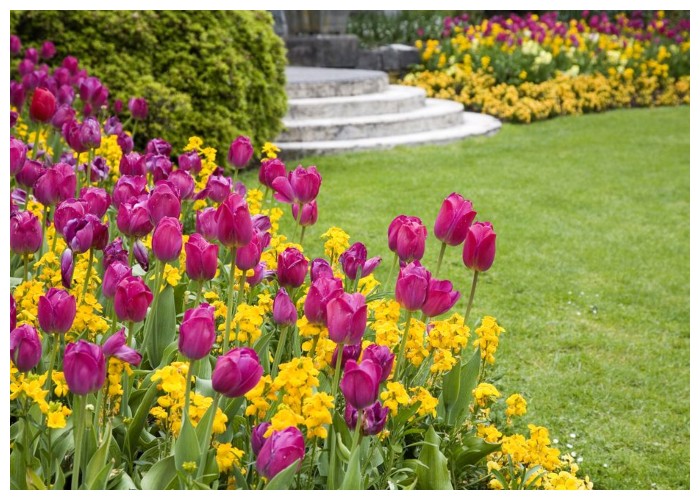
Autumn is the ideal planting season for a dazzling array of tulips from March to May. This period, as the climate transitions towards winter and temperatures fluctuate between 40 and 70 degrees Fahrenheit, provides the perfect conditions for planting. Bobbie Schwartz, a celebrated landscape designer from Shaker Heights, Ohio, recommends starting when the weather cools, typically with temperatures primarily in the 60s.
Before embarking on your tulip planting adventure, envision the tulip landscape you desire. According to Brent Heath of Brent and Becky’s Bulbs, a farm specializing in nearly 200 tulip varieties in Gloucester, Virginia, tulips come in virtually every color imaginable. Planning your garden’s color scheme and selecting varieties that bloom sequentially from early to late spring will ensure a continuous display of color until your summer flora emerges.
Understanding the timing and method for planting spring-flowering bulbs, such as tulips and daffodils, whether in gardens or containers, is essential to embarking on this colorful journey.
Ideal Timing for Planting Tulip Bulbs
Late fall, between mid-October and early December, is optimal for planting tulip bulbs. This schedule allows the bulbs to undergo a necessary hibernation period of 12 to 16 weeks before the arrival of warm weather, which stimulates their growth. Tulips are adaptable to USDA Hardiness Zones 3 to 9, covering a broad range of the United States. However, in warmer zones 8 and 9, it’s crucial to use precooled bulbs or refrigerate them for 10 to 14 weeks to simulate the cold dormancy they require for blooming. The objective is to plant before the ground freezes but after the first frost, ensuring the soil is still workable.
Selecting the Planting Site
For optimal growth and flowering, tulips need full sun, with at least six to eight hours of direct sunlight daily. Avoid shady spots and areas prone to waterlogging or under dense tree canopies. Joan Mazat, a cut flower business manager, advises against planting in areas where tree roots may complicate digging. Soil with a pH of 6 to 7 is ideal, and amendments might be necessary to improve drainage and aeration in clay or sandy soils. Nutrients and bone meal can also enhance soil quality and support healthy bulb growth.
Planting Process
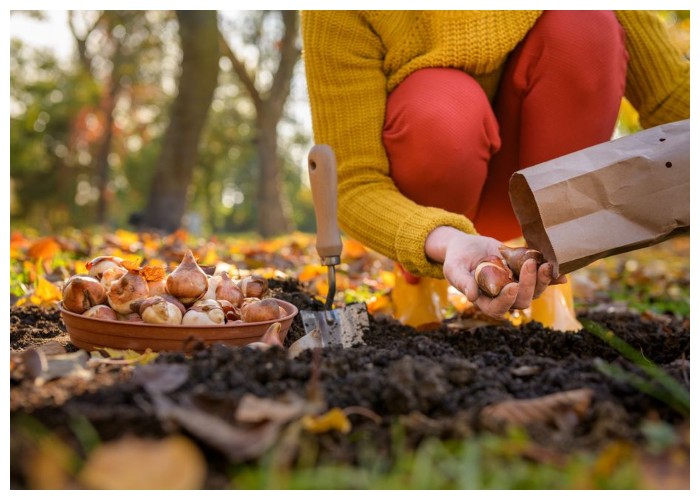
The planting depth should be four times the height of the bulb, using tools like a bulb planter or an auger for efficiency. Space multiple bulbs within a hole to allow a few inches between them for growth. Position bulbs with the tapered end up, and there’s no need for fertilizer in the hole—topping with organic compost suffices. For visual impact, group tulips rather than spacing them sporadically. Adhering to the Rule of Threes, planting bulbs in odd numbers per group enhances aesthetic appeal.
By planting tulips in clusters or extensive areas, you can achieve a striking visual effect in your garden. With proper planning and planting, your spring garden will be a vibrant testimony to the enduring charm of tulips, setting the stage for a season of growth and renewal.